
Mental health practices across the USA are experiencing unprecedented demand for counseling, therapy, psychiatric care, and behavioral health services. While helping patients remains the primary focus, managing the financial side of a practice can often become overwhelming. One of the biggest challenges therapists face is navigating the complexities of billing for mental health therapists while maintaining compliance, accuracy, and profitability.
Unlike many other medical specialties, mental health billing involves unique coding requirements, authorization rules, documentation standards, and payer-specific guidelines. Even small mistakes can lead to denied claims, delayed reimbursements, and increased administrative burdens.
This article explores the essential aspects of mental health billing, common challenges therapists encounter, and practical strategies to optimize revenue while improving operational efficiency.
Understanding Mental Health Billing in Today's Healthcare Environment
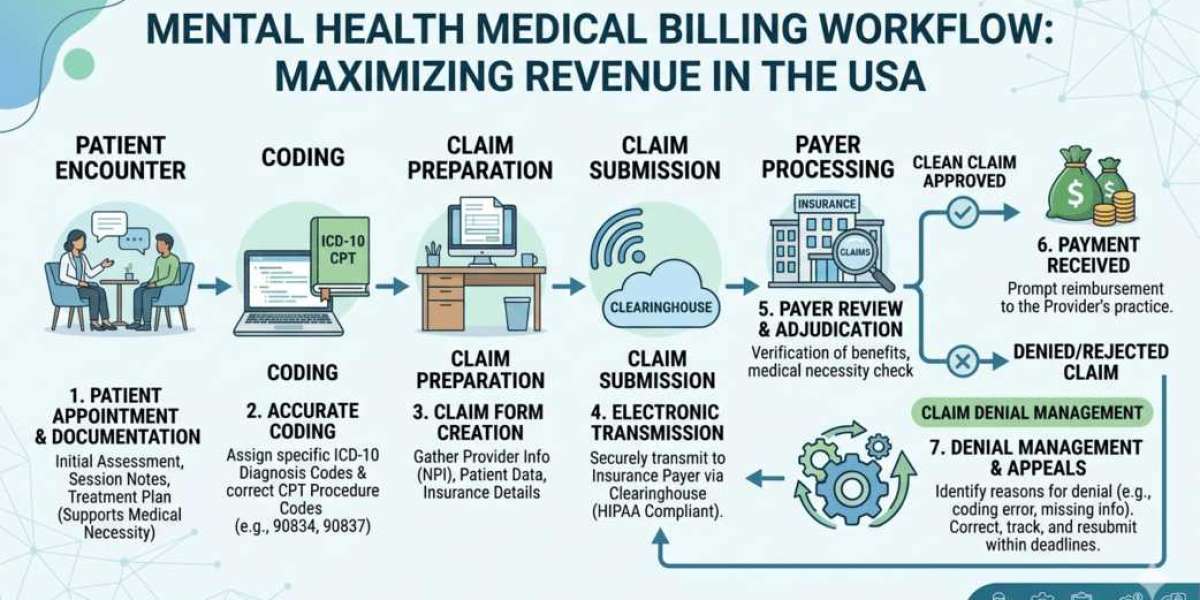
Mental health billing is the process of submitting claims to insurance companies for services provided by therapists, psychologists, psychiatrists, counselors, and behavioral health professionals.
The process includes:
- Patient eligibility verification
- Insurance benefit checks
- Prior authorization management
- Accurate CPT and ICD-10 coding
- Claim submission
- Payment posting
- Denial management
- Appeals processing
Because behavioral health coverage policies vary significantly among insurance carriers, billing for mental health services requires specialized expertise and constant monitoring of payer regulations.
For independent therapists and group practices alike, effective mental health medical billing can directly impact cash flow and long-term financial stability.
Why Billing for Mental Health Therapists Is More Complex Than Other Specialties
Mental health providers often encounter challenges that are less common in traditional medical specialties.
Some of these complexities include:
Frequent Authorization Requirements
Many insurance plans require pre-authorization for therapy sessions, intensive outpatient programs, or psychiatric services. Missing an authorization can result in claim denials regardless of the quality of care provided.
Session-Based Billing Models
Unlike procedures that are billed once, therapy services are often billed according to session duration and service type. Accurate documentation becomes critical to support coding selections.
Telehealth Regulations
The growth of virtual therapy has introduced additional billing considerations. Providers must stay updated on telehealth reimbursement policies, modifier usage, and payer-specific requirements.
Changing Insurance Policies
Behavioral health regulations continue to evolve. Insurance companies frequently update coverage rules, making continuous education necessary for successful claim submission.
These factors make behavioral mental health billing services increasingly valuable for providers seeking financial consistency.
Common Billing Challenges Faced by Mental Health Therapists
Many therapists enter the profession to help people, not to spend hours navigating insurance claims.
Some of the most common obstacles include:
Eligibility Verification Errors
Failing to verify benefits before appointments can result in unexpected claim rejections or patient payment disputes.
Incorrect Coding
Using outdated or incorrect CPT codes can trigger audits, denials, or reduced reimbursements.
Incomplete Documentation
Insurance companies require detailed clinical documentation that supports medical necessity. Missing information may lead to payment delays.
Delayed Claim Submission
Timely filing limits vary among payers. Missing deadlines can permanently eliminate reimbursement opportunities.
Underpaid Claims
Many practices focus only on denied claims while overlooking underpayments that can significantly impact revenue over time.
A structured approach to mental health billing helps providers address these issues before they affect financial performance.
Essential Components of Effective Mental Health Billing
Successful billing services for mental health providers typically include several interconnected processes.
Insurance Verification
Before every appointment, practices should confirm:
- Active coverage
- Deductible status
- Copayment amounts
- Session limitations
- Authorization requirements
This proactive approach minimizes billing surprises for both providers and patients.
Accurate Coding
Behavioral health claims rely heavily on proper CPT and ICD-10 coding.
Commonly used therapy codes include:
- 90791 – Psychiatric Diagnostic Evaluation
- 90834 – Psychotherapy (45 minutes)
- 90837 – Psychotherapy (60 minutes)
- 90847 – Family Psychotherapy
Accurate coding is one of the foundations of effective mental health billing solutions.
Timely Claim Submission
Claims should be submitted promptly after services are rendered. Faster submissions typically result in faster reimbursements and improved cash flow.
Denial Management
Denied claims should never be ignored. A systematic appeals process can recover substantial revenue that might otherwise be lost.
The Growing Importance of Outsourced Mental Health Billing Services
As payer requirements become more complex, many practices are choosing to outsource their billing operations.
Professional mental health billing services can help providers:
- Reduce administrative workload
- Improve claim acceptance rates
- Accelerate reimbursement cycles
- Enhance compliance
- Increase revenue collection
Rather than dedicating staff resources to claim follow-ups and appeals, therapists can focus more time on patient care and practice growth.
For small and mid-sized practices, outsourcing often provides access to specialized expertise that would otherwise be difficult to maintain internally.
How Mental Health Billing Companies Improve Practice Performance
Experienced mental health billing companies understand the unique challenges associated with behavioral healthcare reimbursement.
Their responsibilities often include:
Revenue Monitoring
Tracking key performance indicators such as:
- First-pass claim acceptance rate
- Days in accounts receivable
- Collection rate
- Denial percentage
- Net reimbursement rate
These metrics help identify revenue leaks before they become major financial concerns.
Payer Communication
Billing specialists regularly communicate with insurance carriers regarding:
- Claim status updates
- Appeals
- Authorization issues
- Payment discrepancies
This reduces administrative pressure on clinical teams.
Compliance Management
Healthcare regulations continue to evolve. Mental health billing companies help practices remain compliant with payer requirements and industry standards.
Real-World Example: How Better Billing Improved Revenue
Consider a therapy group practice with six licensed therapists.
The practice struggled with:
- High denial rates
- Delayed payments
- Inconsistent eligibility checks
After implementing specialized mental health billing solutions, they standardized verification procedures, improved coding accuracy, and established a denial tracking system.
Within several months, the practice experienced:
- Fewer claim rejections
- Faster reimbursements
- Improved patient billing transparency
- Increased overall collections
This example highlights how operational improvements can produce measurable financial results without increasing patient volume.
The Role of Medical Billing Services in Behavioral Health
Comprehensive medical billing services play a critical role in supporting mental health practices.
These services often include:
- Patient registration review
- Insurance verification
- Claims processing
- Payment reconciliation
- Accounts receivable management
- Denial resolution
By streamlining administrative workflows, providers can spend more time delivering quality care and less time managing paperwork.
As healthcare reimbursement becomes increasingly complex, professional billing support continues to be a valuable asset for mental health organizations.
Why Medical Coding Services Matter in Mental Health Reimbursement
Accurate coding directly influences reimbursement outcomes.
Professional medical coding services help ensure that:
- Diagnoses support medical necessity
- CPT codes accurately reflect services rendered
- Documentation aligns with payer requirements
- Compliance risks are minimized
Coding errors can lead to delayed payments, audits, or claim denials. Investing in coding accuracy helps protect both revenue and compliance.
Many providers benefit from integrated medical billing and coding services that create consistency throughout the reimbursement process.
How Revenue Cycle Management Services Support Long-Term Growth
Revenue cycle management services encompass every financial step from patient scheduling to final payment collection.
Key benefits include:
Improved Cash Flow
Efficient claim processing reduces reimbursement delays.
Reduced Denials
Proactive claim scrubbing identifies errors before submission.
Better Financial Visibility
Detailed reporting helps practice owners make informed business decisions.
Increased Operational Efficiency
Automation and process improvements reduce administrative burdens.
For growing behavioral health organizations, strong revenue cycle management services create a foundation for sustainable expansion.
The Importance of Credentialing Services for Mental Health Providers
Credentialing remains one of the most overlooked aspects of successful reimbursement.
Credentialing services help providers:
- Enroll with insurance networks
- Maintain payer participation
- Complete recredentialing requirements
- Avoid payment interruptions
Without proper credentialing, providers may experience claim denials even when services are medically necessary and correctly documented.
Maintaining current credentials is essential for uninterrupted revenue generation.
Choosing the Right Billing Partner
When evaluating a mental health billing company, providers should consider:
Industry Experience
Look for organizations with specialized behavioral health expertise.
Transparency
Reliable reporting and communication are critical.
Technology Integration
The billing partner should work seamlessly with existing electronic health record systems.
Compliance Knowledge
The company should stay current with changing regulations and payer requirements.
Selecting the right partner can significantly improve both financial performance and operational efficiency.
Supporting Sustainable Practice Growth
As mental healthcare demand continues to rise across the USA, providers must balance exceptional patient care with effective business operations.
Many organizations are turning to specialized partners such as 247 Medical Billing Services to help manage complex reimbursement challenges. By leveraging expertise in mental health billing, medical billing services, medical coding services, medical billing and coding services, revenue cycle management services, and credentialing services, practices can strengthen their financial foundation while maintaining focus on patient outcomes.
Conclusion
Effective billing for mental health therapists is about much more than submitting insurance claims. It requires a coordinated strategy that includes accurate coding, eligibility verification, authorization management, denial prevention, compliance monitoring, and ongoing revenue optimization.
Whether operating as an independent therapist, group practice, or behavioral health organization, investing in efficient mental health billing processes can significantly improve reimbursement outcomes and reduce administrative stress.
As payer requirements continue to evolve, practices that embrace specialized mental health billing services and comprehensive revenue management strategies will be better positioned for long-term success in the increasingly competitive healthcare landscape.
Frequently Asked Questions (FAQs)
1. What is mental health billing?
Mental health billing is the process of submitting insurance claims and collecting reimbursement for behavioral health services provided by therapists, counselors, psychologists, and psychiatrists.
2. Why is billing for mental health therapists different from general medical billing?
Mental health billing often involves session-based coding, authorization requirements, telehealth regulations, and payer-specific behavioral health guidelines that make the process more complex.
3. How can mental health billing services reduce claim denials?
Professional billing services improve eligibility verification, coding accuracy, documentation review, and claim scrubbing processes, reducing errors that commonly lead to denials.
4. What are mental health billing solutions?
Mental health billing solutions are systems and services designed to streamline claim submission, payment tracking, denial management, and reimbursement optimization for behavioral health providers.
5. Why are credentialing services important for therapists?
Credentialing services help therapists become approved providers with insurance networks, ensuring claims can be processed and reimbursed correctly.
6. How do revenue cycle management services benefit mental health practices?
Revenue cycle management services improve cash flow, reduce denials, enhance financial reporting, and optimize reimbursement throughout the entire patient billing process.
