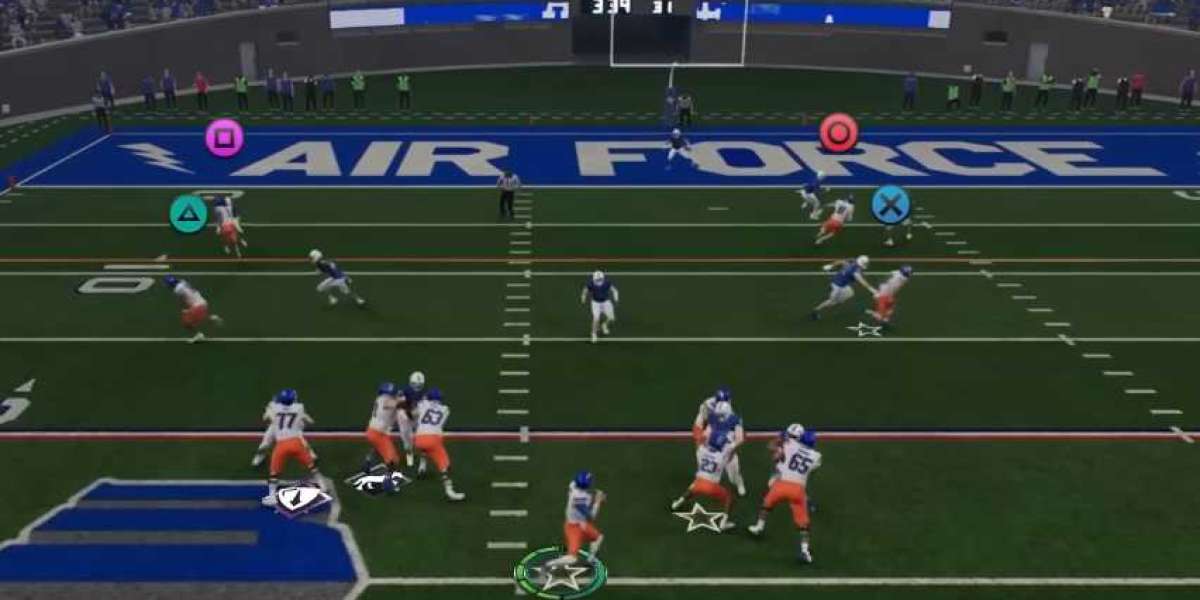
To master touch pass timing in EA Sports College Football 26, the key is understanding that the throw is not about speed—it’s about precision timing. The touch pass sits between a bullet and a lob, giving you a controlled arc that can slip the ball over linebackers while still arriving before deep defenders can react. When executed correctly, it becomes one of the most reliable ways to attack zone coverage and tight windows.
The core mechanic is simple but strict. You need to release the receiver’s button when the passing meter reaches the middle of the blue “safe” zone. That midpoint timing is what produces the intended medium-arc trajectory. If you release too early, the ball floats and hangs. If you hold too long, the throw turns into a bullet and skips over the timing window entirely.
Button Input Mechanics by Style
Different passing settings in College Football 26 slightly change how strict your timing feels, and adapting to your chosen system is essential.
With Placement Accuracy or Revamped Passing, you should hold the receiver button until the meter fills roughly halfway into the blue zone, then release cleanly. This is the most consistent method for producing true touch passes. The margin for error is small: early release creates a lob, while late release turns the throw into a fastball that defeats the purpose of the touch pass entirely.
With Classic Passing, the input is faster and more reactive. You are essentially tapping and releasing in a tight rhythm. The challenge here is sensitivity—even a fraction of a second too long can convert your pass into a bullet, while too quick of a tap can produce an uncontrolled lofted throw.
Pro Timing and Placement Strategies
Once you understand the input window, the next step is learning when and where to use the touch pass effectively.
Against zone defenses like Cover 2 or Cover 3, the touch pass is ideal for layered throws. Think of routes like corners, posts, and deep crossers. The goal is to release the ball just as your receiver clears the underneath linebacker but before they enter the deep safety’s range. This creates a natural “window” where the ball drops in without pressure from either level of the defense.
Another key technique is surgical ball placement using the left stick. By pushing the analog stick at a slight upward angle toward open space—usually around 45 degrees away from trailing defenders—you can guide your receiver into stride rather than throwing directly at them. This reduces contested catches and increases yards after the catch.
The L1/LB modifier adds another layer of control. Holding L1 on PlayStation or LB on Xbox while throwing a touch pass increases the arc of the ball. This is especially useful in the red zone, where fades and tight seam routes require the ball to drop over linebackers while still giving your receiver a chance to attack it at its highest point.
Finally, pocket stability matters more than most players realize. Throwing a touch pass while scrambling shrinks your timing window and increases the chance of inaccurate throws. Staying set in the pocket gives you the widest possible blue zone and the most consistent results. When your feet are planted, the mechanic behaves exactly as intended; when you’re moving, the margin for error becomes much smaller.
The touch pass in College Football 26 is less about button mashing and more about rhythm and awareness. Once you learn the feel of the midpoint release, it becomes a powerful tool for attacking layered defenses and creating clean separation in tight coverage. Combined with proper stick placement and situational awareness, it turns into one of the most reliable passing tools in your entire offensive arsenal.