
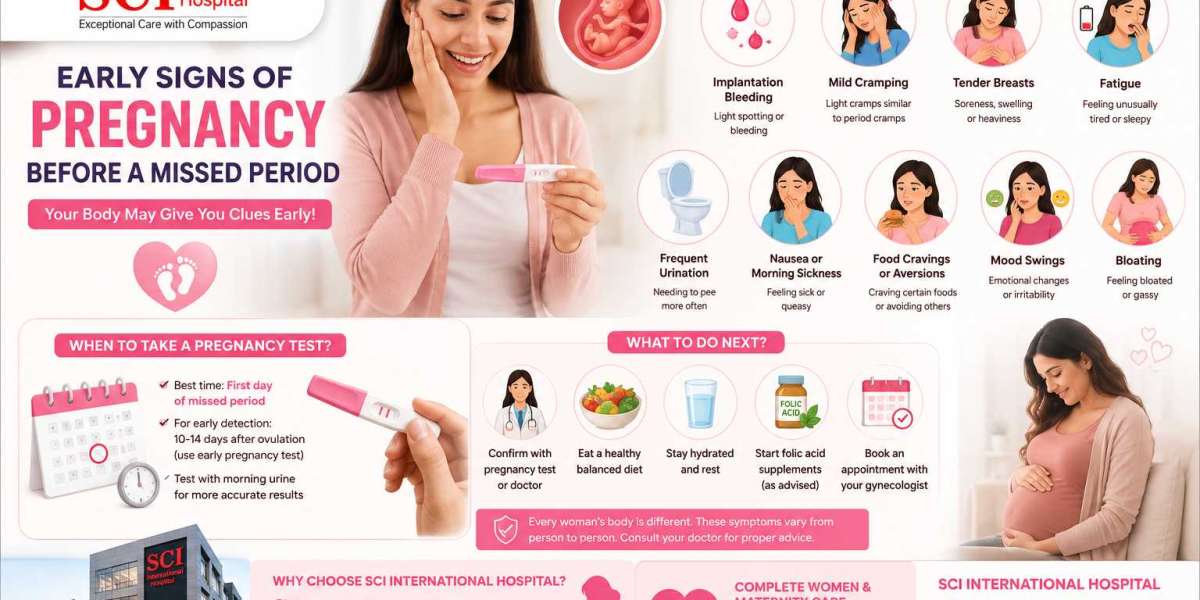
Pregnancy is an exciting journey, and many women begin noticing subtle changes in their bodies even before they miss their first period. While a missed period is often considered the most common sign of pregnancy, several early signs of pregnancy may appear days after conception. Recognizing these symptoms can help you seek timely medical advice, confirm your pregnancy, and begin essential prenatal care.
In this guide, we'll discuss the most common pregnancy symptoms before a missed period, when to take a pregnancy test, and why early prenatal care is important for both mother and baby.
Can You Experience Pregnancy Symptoms Before a Missed Period?
Yes. Every pregnancy is different, and some women notice early pregnancy symptoms within one to two weeks after conception. These symptoms occur due to hormonal changes, particularly the rise in human chorionic gonadotropin (hCG), progesterone, and estrogen levels.
However, it's important to remember that these symptoms can vary from person to person and may also resemble premenstrual symptoms. The only way to confirm pregnancy is through a pregnancy test and consultation with a gynecologist.
10 Early Signs of Pregnancy Before a Missed Period
1. Light Spotting (Implantation Bleeding)
One of the earliest signs of pregnancy is implantation bleeding, which occurs when the fertilized egg attaches to the lining of the uterus.
Characteristics include:
- Light pink or brown spotting
- Lasts for one to two days
- Much lighter than a regular period
Not every woman experiences implantation bleeding, but it is considered an early pregnancy symptom.
2. Mild Cramping
Some women experience light abdominal cramps similar to menstrual cramps during implantation. These cramps are usually mild and short-lived.
3. Tender or Swollen Breasts
Hormonal changes can make the breasts feel:
- Sore
- Heavy
- Tender
- More sensitive
The nipples may also become darker as pregnancy progresses.
4. Fatigue
Feeling unusually tired is one of the most common early pregnancy symptoms. Rising progesterone levels can make you feel sleepy even if you're getting enough rest.
5. Frequent Urination
Hormonal changes increase blood flow to the kidneys, causing you to urinate more often—even before your missed period.
6. Nausea or Morning Sickness
Although morning sickness usually begins around the sixth week of pregnancy, some women experience nausea earlier.
Symptoms may include:
- Nausea
- Food aversions
- Increased sensitivity to smells
- Occasional vomiting
7. Food Cravings or Aversions
Many women suddenly crave certain foods while finding others unpleasant due to hormonal fluctuations.
8. Mood Swings
Rapid hormonal changes can lead to emotional ups and downs, irritability, or increased sensitivity.
9. Bloating
Increased progesterone slows digestion, causing bloating that may feel similar to premenstrual symptoms.
10. Increased Basal Body Temperature
A consistently elevated basal body temperature for more than two weeks after ovulation may indicate pregnancy.
When Should You Take a Pregnancy Test?
Although some pregnancy tests claim to detect pregnancy before a missed period, the most accurate results are usually obtained:
- On the first day of a missed period
- Or at least 10–14 days after ovulation
If the first result is negative but pregnancy is still suspected, repeat the test after 48 hours or consult a gynecologist.
Importance of Early Pregnancy Care
Early prenatal care helps ensure the health of both the mother and the developing baby.
Your doctor may recommend:
- Blood tests
- Ultrasound scans
- Nutritional counseling
- Folic acid supplements
- Lifestyle guidance
- Regular pregnancy check-ups
Early medical supervision helps detect any potential complications and supports a healthy pregnancy.
Tips for a Healthy Pregnancy
Once pregnancy is confirmed:
- Eat a balanced diet rich in fruits and vegetables.
- Take prenatal vitamins as prescribed.
- Stay hydrated.
- Avoid smoking and alcohol.
- Exercise moderately after consulting your doctor.
- Get adequate sleep.
- Attend all scheduled prenatal appointments.
Healthy habits during the first trimester play a crucial role in fetal development.
When Should You See a Doctor?
You should consult a gynecologist if you:
- Have a positive pregnancy test
- Experience severe abdominal pain
- Notice heavy bleeding
- Have persistent vomiting
- Experience dizziness or fainting
- Have a history of high-risk pregnancy
Prompt medical attention helps ensure appropriate care from the beginning of your pregnancy journey.
Why Choose SCI International Hospital for Pregnancy Care?
If you're looking for the best gynecologist in Delhi or a trusted maternity hospital in Delhi, SCI International Hospital provides comprehensive pregnancy and women's healthcare services with a patient-centered approach.
SCI International Hospital is a leading multispecialty healthcare center in Delhi NCR with 45+ experienced doctors, 25,000+ successful surgeries, and advanced medical infrastructure. The hospital's Department of Obstetrics and Gynecology offers expert care from preconception counseling to delivery and postpartum support.
The hospital provides:
- Pregnancy diagnosis and prenatal care
- High-risk pregnancy management
- Normal and cesarean delivery
- Advanced ultrasound and fetal monitoring
- Fertility and IVF services
- PCOS and gynecological treatment
- Postnatal care and breastfeeding support
With experienced gynecologists, modern diagnostic technology, and compassionate maternity care, SCI International Hospital ensures personalized treatment for every stage of pregnancy. The hospital focuses on the health and comfort of both mother and baby, making it a trusted choice for women seeking quality pregnancy care in Delhi.
To learn more or schedule an appointment, visit https://scihospital.com/.
Frequently Asked Questions
Can pregnancy symptoms appear before a missed period?
Yes. Some women experience symptoms such as implantation bleeding, fatigue, breast tenderness, bloating, and mild cramping before missing their period.
Is implantation bleeding common?
Not all women experience implantation bleeding, but it is considered a normal early sign of pregnancy.
When should I visit a gynecologist?
You should consult a gynecologist as soon as your pregnancy test is positive or if you experience unusual pain or bleeding.
Can pregnancy symptoms vary between women?
Yes. Every pregnancy is unique, and symptoms can differ in timing and intensity.


