
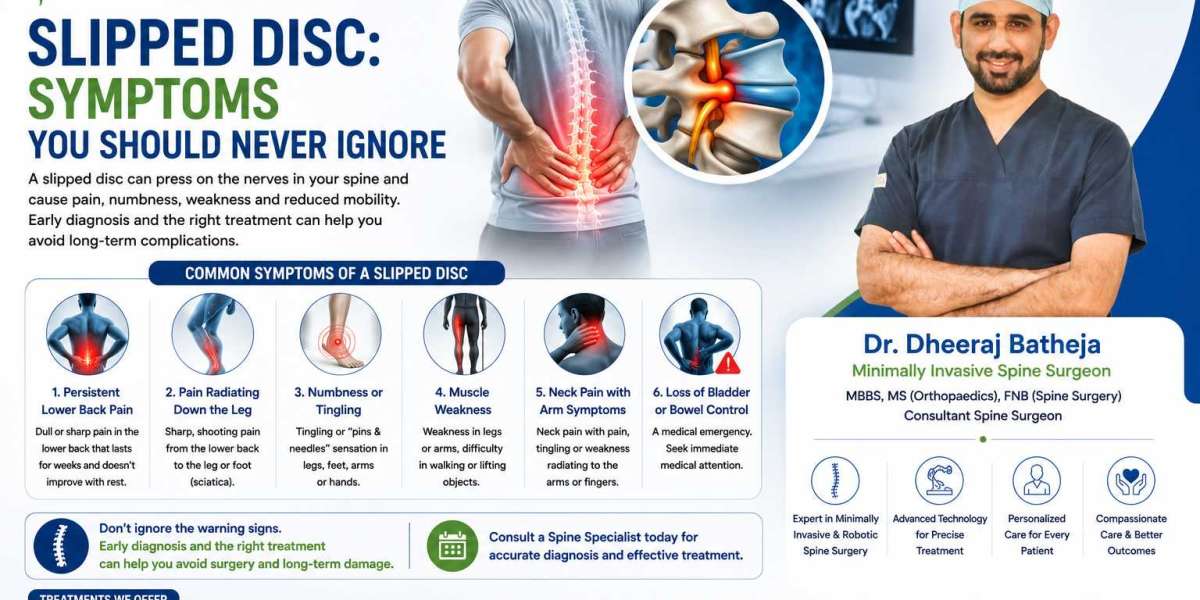
Back pain is one of the leading causes of disability worldwide, and one of its most common causes is a slipped disc. While many people assume that a slipped disc is simply a part of aging or the result of lifting something heavy, it can develop due to several reasons and, if left untreated, may lead to chronic pain, nerve damage, and reduced mobility.
Recognizing the early warning signs and seeking timely treatment can help prevent complications and improve your quality of life. If you're experiencing persistent back pain, neck pain, or pain radiating to your arms or legs, it may be time to consult a spine specialist.
What Is a Slipped Disc?
A slipped disc, also known as a herniated disc or prolapsed disc, occurs when the soft, gel-like center of a spinal disc pushes through a tear in its tough outer layer. This bulging disc can press against nearby nerves, causing pain, numbness, tingling, or weakness.
Although a slipped disc can occur anywhere along the spine, it most commonly affects the:
- Lumbar spine (lower back) – causing lower back pain and sciatica.
- Cervical spine (neck) – causing neck pain and symptoms radiating into the shoulders and arms.
Contrary to popular belief, the disc does not actually "slip." Instead, it bulges or herniates due to degeneration or injury.
Common Causes of a Slipped Disc
Several factors can increase the risk of developing a slipped disc, including:
- Age-related disc degeneration
- Heavy lifting with improper technique
- Poor posture
- Obesity
- Sedentary lifestyle
- Repetitive bending or twisting movements
- Sports injuries
- Smoking, which accelerates disc degeneration
Maintaining a healthy weight, regular exercise, and good posture can significantly reduce your risk.
Symptoms You Should Never Ignore
Not every slipped disc causes severe pain, but certain symptoms should never be overlooked.
1. Persistent Lower Back Pain
One of the earliest signs is continuous lower back pain that doesn't improve with rest or medication. The pain may worsen when bending, coughing, or sitting for prolonged periods.
If your back pain lasts more than a few weeks, it deserves a proper medical evaluation.
2. Pain Radiating Down the Leg (Sciatica)
When a slipped disc compresses the sciatic nerve, it can cause sciatica, characterized by:
- Sharp pain from the lower back to the buttock
- Pain extending down one leg
- Burning sensation
- Electric shock-like pain
Sciatica is one of the most common symptoms of lumbar disc herniation.
3. Numbness or Tingling
Pressure on spinal nerves may result in numbness or tingling in the:
- Legs
- Feet
- Arms
- Hands
These sensations indicate nerve irritation and should not be ignored.
4. Muscle Weakness
A compressed nerve may weaken the muscles it controls.
You may notice:
- Difficulty lifting the foot
- Trouble gripping objects
- Weakness while climbing stairs
- Reduced balance
Persistent muscle weakness requires immediate evaluation by a spine surgeon.
5. Neck Pain with Arm Symptoms
A cervical slipped disc often causes:
- Severe neck pain
- Shoulder pain
- Pain radiating into the arm
- Tingling in the fingers
- Reduced arm strength
Ignoring these symptoms may lead to worsening nerve compression.
6. Difficulty Walking
As nerve compression becomes more severe, walking may become painful or difficult. Some patients also experience leg heaviness or imbalance.
7. Loss of Bladder or Bowel Control
Although rare, sudden loss of bladder or bowel control combined with severe back pain is a medical emergency that may indicate Cauda Equina Syndrome. Immediate treatment is essential to prevent permanent nerve damage.
How Is a Slipped Disc Diagnosed?
A spine specialist will perform a comprehensive evaluation that may include:
- Detailed medical history
- Physical examination
- Neurological assessment
- X-rays
- MRI scan
- CT scan (if required)
Accurate diagnosis helps determine the severity of the condition and guides the most appropriate treatment.
Treatment Options for a Slipped Disc
Fortunately, most patients improve without surgery.
Non-Surgical Treatment
Depending on your condition, treatment may include:
- Pain-relieving medications
- Anti-inflammatory medicines
- Physiotherapy and rehabilitation
- Activity modification
- Lifestyle changes
- Epidural steroid injections
- Guided pain management procedures
Early treatment often prevents the condition from worsening.
Minimally Invasive Spine Surgery
If symptoms persist despite conservative treatment, or if there is significant nerve compression or muscle weakness, surgery may be recommended.
Modern minimally invasive spine surgery offers several advantages:
- Smaller incisions
- Less muscle damage
- Reduced blood loss
- Less postoperative pain
- Faster recovery
- Shorter hospital stay
In selected cases, endoscopic spine surgery and robotic spine surgery provide even greater precision and improved outcomes.
Why Choose Dr. Dheeraj Batheja?
When it comes to spine care, choosing an experienced specialist is essential for achieving the best possible outcome.
Dr. Dheeraj Batheja is a highly skilled Minimally Invasive Spine Surgeon with expertise in diagnosing and treating a wide range of spinal disorders. His approach focuses on identifying the root cause of pain rather than simply treating the symptoms, ensuring that every patient receives personalized, evidence-based care.
Patients trust Dr. Batheja because he combines advanced technology with compassionate treatment, helping individuals regain mobility while minimizing recovery time.
What Does Dr. Dheeraj Batheja Offer?
At DB Spine Surgeon, patients receive comprehensive spine care under one roof. Services include:
- Comprehensive spine consultations
- Accurate diagnosis using advanced imaging
- Non-surgical spine treatment
- Physiotherapy and rehabilitation
- Pain management procedures
- Endoscopic spine surgery
- Minimally invasive spine surgery (MISS)
- Robotic spine surgery
- Treatment for slipped disc, sciatica, spinal stenosis, cervical spondylosis, scoliosis, spinal fractures, and degenerative spine disorders
Every treatment plan is customized according to the patient's condition, age, activity level, and long-term goals.
Why Patients Choose Dr. Dheeraj Batheja
Patients choose Dr. Batheja because of his commitment to delivering world-class spine care with a patient-first approach.
His philosophy includes:
- Thorough evaluation before recommending treatment
- Preference for conservative treatment whenever possible
- Advanced minimally invasive and robotic surgical techniques
- Faster recovery with less postoperative discomfort
- Personalized treatment plans
- Comprehensive follow-up and rehabilitation support
Rather than recommending surgery for every patient, Dr. Batheja carefully evaluates each case and recommends the least invasive treatment that will provide lasting relief.
Final Thoughts
A slipped disc is a common yet potentially serious spinal condition that should never be ignored. Symptoms such as persistent back pain, lower back pain, neck pain, sciatica, numbness, tingling, or muscle weakness often indicate nerve compression and require prompt medical attention.
Early diagnosis and appropriate treatment can prevent complications, relieve pain, and restore your quality of life. Whether you need conservative care, physiotherapy, or advanced minimally invasive spine surgery, consulting an experienced spine specialist is the key to successful recovery.
If you're struggling with symptoms of a slipped disc, schedule a consultation with Dr. Dheeraj Batheja at DB Spine Surgeon. With expertise in advanced spine care, minimally invasive techniques, and personalized treatment plans, he is committed to helping patients return to a healthier, pain-free, and more active life.