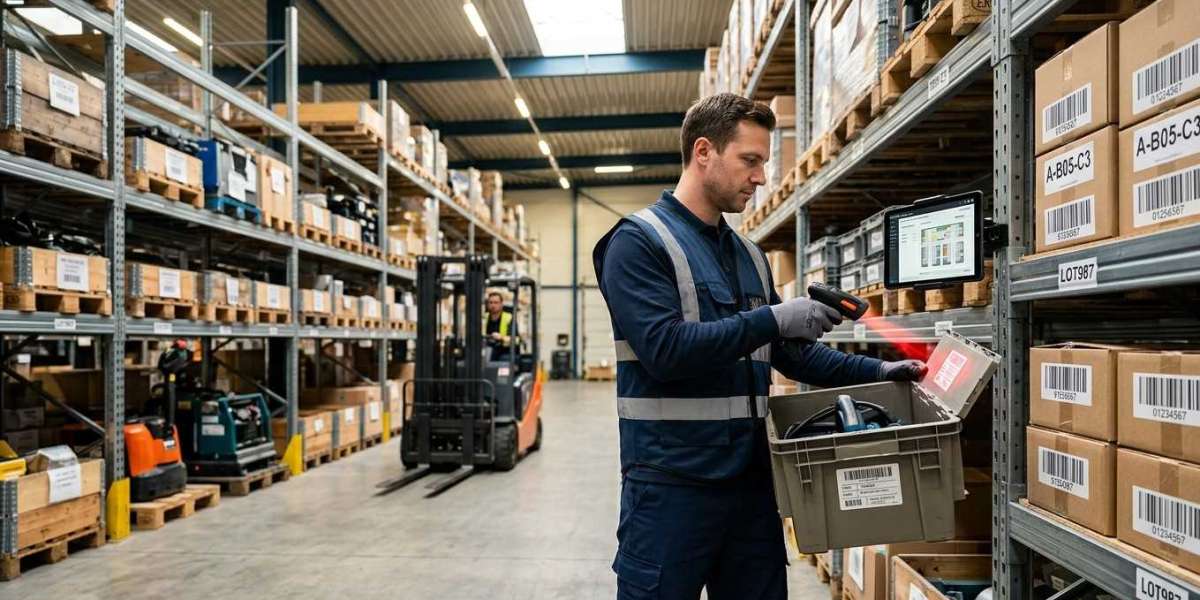
Managing assets effectively is essential for warehouses that handle large volumes of products, equipment, tools, pallets, containers, and other valuable resources. Without an organized tracking system, businesses can struggle with misplaced assets, inaccurate records, unnecessary purchases, and delays in daily operations. Barcode technology provides a practical and scalable way to identify, track, and manage warehouse assets with greater accuracy.
Modern businesses can use barcode scanners, barcode labels, mobile computers, and inventory software to create a connected asset-tracking process. Pointus Solutions provides businesses with Auto-ID and barcode technologies designed to support warehouse and inventory operations. Organizations can also Shop Barcode equipment and related Printing Products to create dependable identification systems for different warehouse environments.
What Is Warehouse Asset Tracking?
Warehouse asset tracking is the process of identifying, monitoring, and managing physical assets within a warehouse or distribution facility.
These assets can include:
- Warehouse equipment
- Tools and machinery
- Pallets and containers
- Storage bins
- Handheld devices
- Mobile computers
- Forklifts and other equipment
- Inventory handling equipment
- IT and office equipment
- Returnable transport items
- Products and stock
An asset tracking system provides information about what an organization owns, where an asset is located, how it is being used, and whether it is available, assigned, under maintenance, or ready for deployment.
Barcode technology makes this process easier by assigning a unique barcode to each asset and allowing employees to scan the barcode whenever an asset is moved or used.
Why Warehouse Asset Tracking Matters
Warehouses often contain thousands of assets distributed across different storage areas and operational zones. When assets are tracked manually, information can quickly become outdated.
For example, a company may purchase several handheld scanners for warehouse employees. If there is no reliable tracking process, management may not know which employee has a particular device, where it is located, or whether it is currently operational.
Poor asset visibility can lead to:
- Lost equipment
- Duplicate purchases
- Unnecessary replacement costs
- Delayed warehouse operations
- Inaccurate asset records
- Difficulty during audits
- Poor utilization of resources
Barcode technology creates a simple identification method that helps businesses maintain more accurate asset information.
How Barcode Technology Works for Asset Tracking
A barcode-based asset tracking system typically involves four main components:
- Unique asset identification
- Barcode labels
- Barcode scanning devices
- Asset management or inventory software
Each asset receives a unique identification number represented by a barcode. The barcode is attached to the asset using a suitable label.
When an employee scans the barcode, the system retrieves the corresponding asset record. Depending on the software and workflow, the record may contain information such as:
- Asset ID
- Asset description
- Location
- Department
- Assigned employee
- Purchase information
- Current status
- Maintenance history
- Warranty details
Every scan can create a digital record of an asset transaction.
1. Improved Asset Identification
One of the biggest advantages of barcode technology is simple and consistent asset identification.
Instead of relying on handwritten descriptions, employees can scan a unique barcode associated with an individual asset. This reduces confusion when multiple items look similar.
For example, two warehouse scanners may have the same model number but different asset IDs. Assigning a unique barcode to each device allows the business to track them separately.
This makes it easier to identify specific assets during inventory checks, maintenance, transfers, and audits.
2. Better Asset Location Visibility
Warehouse assets frequently move between different areas. Equipment can be transferred from receiving to storage, from storage to picking, or from one warehouse location to another.
Scanning an asset and its destination location can create a record of the movement.
For example:
Asset Scan → Location Scan → System Update
This process allows the asset management system to maintain a more current record of where the asset should be located.
Improved location visibility can reduce the time employees spend searching for equipment and other warehouse resources.
3. Reduced Risk of Lost Assets
Lost or misplaced equipment can create unnecessary costs and operational disruption. Businesses may end up purchasing replacements even though the original asset is still somewhere within the organization.
Barcode tracking makes it easier to establish accountability.
An organization can record:
- Who received the asset
- Where it was assigned
- When it was moved
- Its current status
- Its last recorded location
Although barcode technology does not physically prevent an asset from being misplaced, it provides a structured method for identifying and investigating asset movements.
4. More Accurate Asset Records
Manual asset records can contain spelling mistakes, duplicate entries, missing information, or outdated locations.
Barcode scanning reduces the need for employees to repeatedly type asset identification numbers.
When an employee scans an asset, the system can retrieve the existing record automatically. This helps maintain consistency across asset databases.
Accurate records are especially valuable during:
- Internal audits
- Financial reporting
- Equipment inspections
- Warehouse reorganizations
- Insurance assessments
- Asset disposal
- Annual inventory checks
5. Faster Warehouse Audits
Asset audits can become time-consuming when employees must manually compare physical assets against spreadsheets or paper records.
With barcode technology, employees can walk through the warehouse and scan assets systematically.
The system can compare scanned assets against expected records and help identify:
- Missing assets
- Duplicate records
- Incorrect locations
- Unregistered equipment
- Assets requiring attention
This can make periodic asset verification more organized and efficient.
6. Lower Administrative Work
Traditional asset tracking often involves spreadsheets, paper forms, and manual updates. Employees may need to enter information multiple times.
Barcode scanning automates much of the identification process.
A worker can scan an asset instead of manually entering its identification number. If the barcode system is connected to asset management software, the transaction can be recorded automatically.
This reduces repetitive administrative tasks and allows warehouse staff to focus on operational responsibilities.
7. Improved Equipment Utilization
Warehouse equipment represents an investment. Businesses need to understand whether their equipment is being used effectively.
Barcode tracking can provide information about asset assignments and movements.
Management can analyze records to identify:
- Frequently used equipment
- Underutilized assets
- Assets assigned to inactive areas
- Equipment that is repeatedly transferred
- Assets requiring replacement
This information can support better resource planning and help businesses make informed decisions about future purchases.
8. Easier Maintenance Tracking
Warehouse equipment often requires regular maintenance. Tracking maintenance schedules manually can be difficult, particularly when an organization manages a large number of assets.
A barcode can provide quick access to an asset's digital record.
When a technician scans the asset, the system can display relevant information such as maintenance history, service requirements, or current status.
Businesses can use barcode-based tracking to organize maintenance activities for:
- Mobile computers
- Barcode scanners
- Printers
- Forklifts
- Packaging equipment
- Warehouse machinery
- Other operational equipment
Keeping better maintenance records can also help businesses identify assets that frequently require repairs.
9. Better Accountability
Asset tracking becomes particularly useful when equipment is shared among multiple employees, departments, or warehouse locations.
A barcode system can record asset assignments and transfers.
For example, when an employee receives a mobile computer, the asset can be scanned along with the employee or department information. When the device is returned, another transaction can update its status.
This creates a more structured chain of responsibility.
10. Easy Integration With Warehouse Systems
Barcode technology becomes even more valuable when integrated with existing business software.
A barcode solution can connect with systems such as:
- Warehouse Management Systems (WMS)
- Enterprise Resource Planning (ERP)
- Inventory management platforms
- Asset management software
- Procurement systems
- Maintenance management applications
Integration allows asset information to move between systems without unnecessary manual data entry.
For example, a warehouse worker can scan an asset and update its location in the asset management system while the relevant inventory or operational records are updated accordingly.
Choosing the Right Barcode Labels for Warehouse Assets
The barcode label is an important part of an asset tracking system. The label must remain readable for the expected life of the asset.
Businesses should consider:
Durability
Assets exposed to dust, moisture, chemicals, abrasion, or frequent handling may require durable label materials.
Barcode Size
The barcode should be large enough to scan reliably while fitting appropriately on the asset.
Adhesive
The adhesive should match the surface and operating conditions of the asset.
Barcode Type
Businesses can choose between different barcode formats depending on their software requirements, data capacity, and scanning environment.
For long-term asset identification, the goal is to produce labels that remain readable and securely attached.
Selecting the Right Barcode Scanners
Different warehouse environments may require different scanning equipment.
Handheld Scanners
Suitable for fixed workstations and general-purpose scanning.
Wireless Scanners
Useful when employees need to move freely throughout the warehouse.
Mobile Computers
Combine scanning capabilities with a display and computing functions, allowing employees to access asset records while working.
Long-Range Scanners
Useful in larger warehouse environments where assets may need to be scanned from greater distances.
Businesses should consider scanning range, barcode type, connectivity, durability, ergonomics, and compatibility with existing software before selecting equipment.
Best Practices for Barcode-Based Asset Tracking
A successful barcode asset tracking program requires more than simply printing labels.
Businesses should:
- Give every asset a unique identification number.
- Use durable labels appropriate for the environment.
- Standardize barcode placement.
- Maintain a centralized asset database.
- Train employees on scanning procedures.
- Scan assets whenever they are moved or reassigned.
- Conduct regular asset audits.
- Keep scanners and printers properly maintained.
- Integrate barcode data with relevant business software.
- Review asset records regularly for inconsistencies.
These practices help create a more reliable and consistent tracking process.
The Role of Barcode Printing Solutions
High-quality barcode printing is essential for successful warehouse asset tracking. If labels are unclear, damaged, or difficult to scan, employees may experience delays and scanning errors.
Businesses should select appropriate barcode printers, label materials, ribbons, and accessories based on their environment.
Using suitable Printing Products can help organizations produce consistent labels for equipment, shelves, bins, pallets, containers, and other warehouse assets.
Organizations can also Shop Barcode scanners, printers, labels, and mobile data collection devices to build a complete asset identification solution.
Measuring the Success of Barcode Asset Tracking
Businesses can measure the effectiveness of their barcode asset tracking system using practical performance indicators.
Useful metrics include:
- Asset record accuracy
- Number of missing assets
- Time required for audits
- Asset search time
- Equipment utilization
- Maintenance compliance
- Number of duplicate purchases
- Number of unidentified assets
- Asset transfer processing time
Tracking these measurements can help management identify improvements and determine where additional process changes may be needed.
Conclusion
Warehouse asset tracking is an important part of maintaining operational efficiency, controlling costs, and improving visibility over valuable resources. Barcode technology provides a straightforward way to identify individual assets, record their movements, monitor assignments, support audits, and maintain more accurate digital records.
By combining barcode labels, scanners, mobile computers, printers, and asset management software, businesses can establish a structured tracking process across their warehouse operations. The technology can also support maintenance management, equipment utilization, accountability, and integration with broader WMS and ERP systems.
For businesses looking to implement or improve a barcode-based asset tracking system, Pointus Solutions offers Auto-ID technologies that can support different warehouse requirements. Companies can Shop Barcode scanners and identification equipment while selecting suitable Printing Products for durable and reliable asset labels. With the right technology and standardized processes, barcode asset tracking can provide businesses with better visibility and greater control over their warehouse resources.