
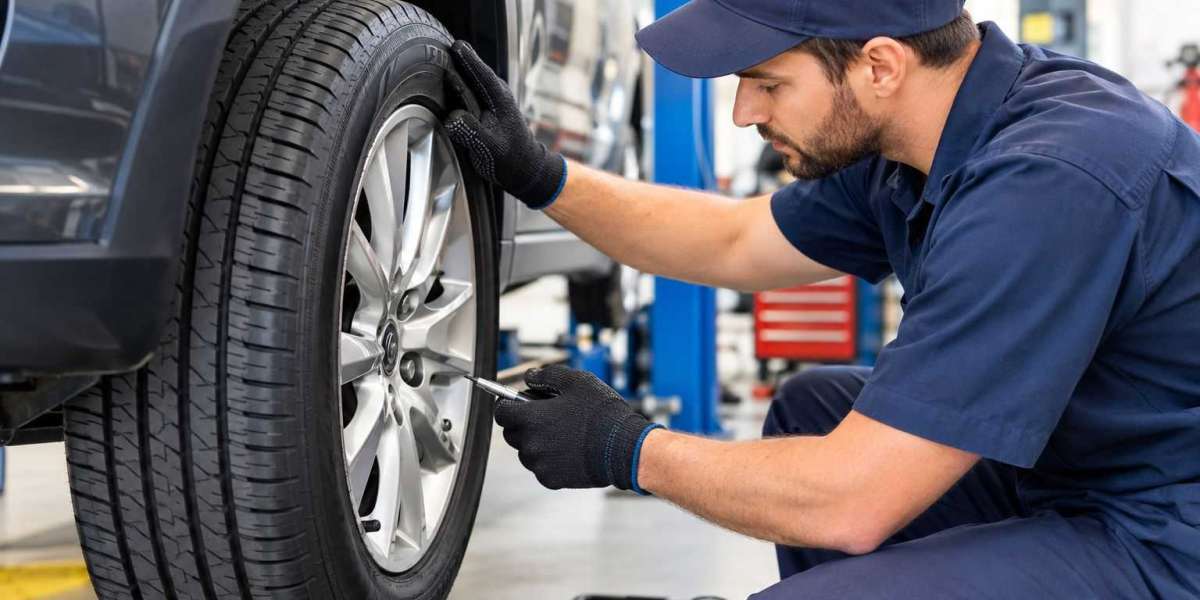
Tire problems do not always begin with a dramatic flat. In many cases, the first warning is subtle, such as a tire that loses pressure repeatedly, a new vibration, or uneven tread wear. Recognizing these signs early can help drivers address problems before they affect safety or lead to more expensive damage.
How do I know when my tires need professional attention?
You may need a tire repair service when a tire repeatedly loses air, has a visible puncture, develops a bulge or sidewall cut, wears unevenly, or causes vibration while driving. Professional inspection can determine whether the problem is repairable, related to the wheel, or serious enough to require tire replacement.
Knowing what to watch for makes it easier to respond before a minor issue becomes a roadside emergency.
1. Your tire keeps losing air
One of the clearest warning signs is having to refill the same tire repeatedly. A tire should not require frequent air additions under normal conditions.
Possible causes include:
A puncture
Valve stem leakage
Bead leakage
Wheel damage
Temperature-related pressure changes
If the pressure continues dropping, an inspection can identify the actual source.
2. You find a nail or screw
Road debris can create punctures that are not immediately obvious. If you notice a nail or screw in the tread, avoid assuming that removing it will solve the problem.
The puncture should be inspected to determine its location, size, and whether the tire has suffered internal damage.
3. The vehicle vibrates while driving
A new vibration through the steering wheel or vehicle can have several causes. Tire imbalance, uneven tread wear, wheel damage, or other tire-related issues can contribute.
If vibration appears suddenly after hitting a pothole or curb, inspection is particularly important.
4. You notice uneven tread wear
Look at your tires from time to time. If one section appears significantly more worn than another, there may be an underlying issue.
Uneven wear can be associated with incorrect tire pressure, wheel alignment, tire imbalance, or worn suspension components. Identifying the cause can help prevent the same problem from affecting another tire.
5. There is visible sidewall damage
Cuts, cracks, bulges, or bubbles on the sidewall should never be ignored. Sidewall damage can affect the structural integrity of the tire.
Because this part of the tire flexes while the vehicle moves, damaged sidewalls may not be suitable for conventional repair.
6. The vehicle feels different on the road
Drivers often notice changes before they see a problem. If the vehicle begins pulling, feels less stable, or responds differently during turns, tire condition should be considered along with alignment and suspension components.
A professional inspection can help separate tire problems from other mechanical issues.
Can a damaged tire always be repaired?
No. Whether a tire can be repaired depends on the type, location, and extent of the damage, as well as the tire's overall condition.
A puncture in an appropriate area of the tread may be repairable. However, serious sidewall damage, excessive wear, structural damage, or certain types of previous repairs may make replacement the safer option.
A responsible technician should explain the condition of the tire and recommend the safest option rather than repairing a tire simply because a repair is technically possible.
What should I do when I notice a tire problem?
Start by checking the tire pressure and visually inspecting the tire if it is safe to do so. Avoid driving on a severely underinflated or visibly damaged tire.
If the issue is uncertain, professional inspection is the better choice. Continuing to drive may turn a repairable problem into a more serious tire failure.
FAQ
Why does one tire keep losing air?
A recurring leak can come from a puncture, valve stem, bead seal, wheel damage, or another issue. Professional inspection can locate the source.
Is a tire bulge dangerous?
A bulge can indicate damage to the tire's internal structure and should be inspected immediately. Continued driving may increase the risk of tire failure.